
What happens at the end of a copier lease?
Read the lease’s end-of-term section well before expiration. Record the notice window, return location, shipping responsibility, required condition, purchase option and any automatic renewal language. Dealer advice does not replace the finance company’s written instructions.
Return the copier at lease end
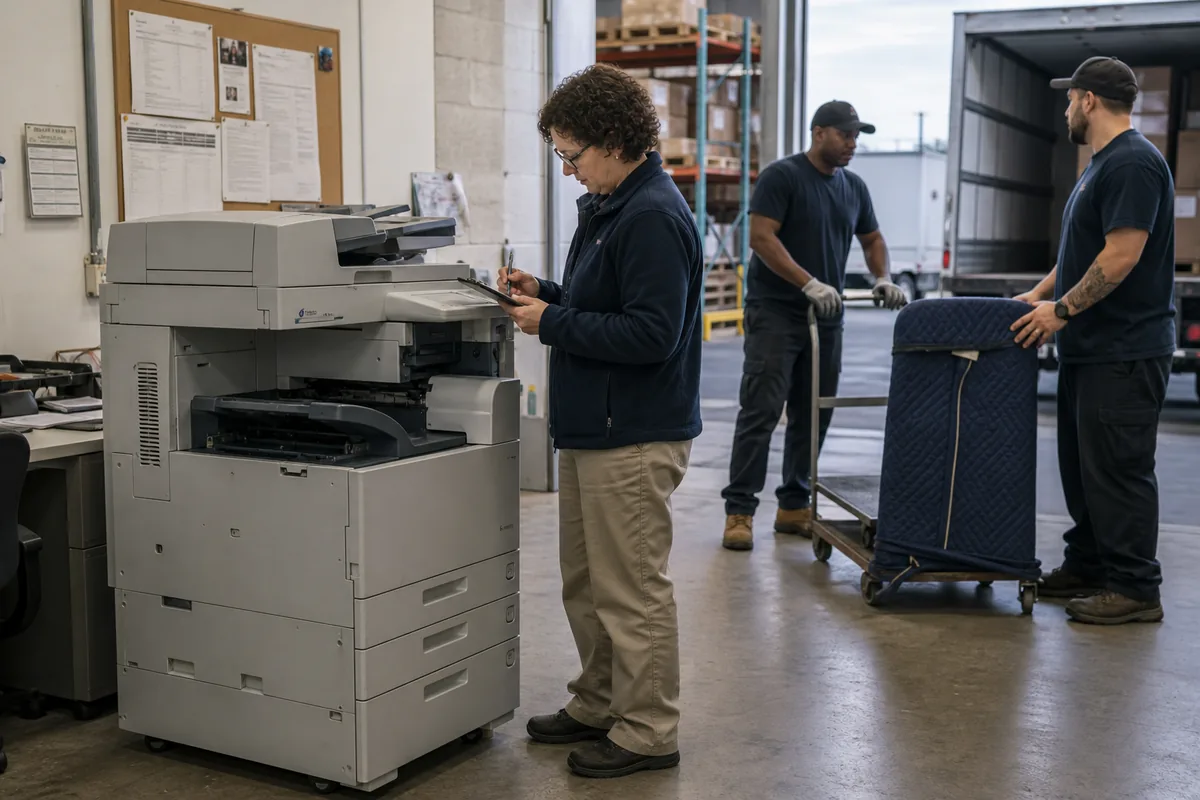
Request written return authorization and the exact destination. Photograph the machine, record meters and serial numbers, inventory accessories and use appropriate equipment movers. Clarify freight, insurance and packaging responsibility before pickup.
Office Copier Lease Buyout and Renewal Options
A purchase option can make sense when the machine is reliable, supported and correctly sized. Compare the buyout with market value, remaining service life and the cost of a replacement. Month-to-month extensions can be convenient but may not be economical.
Avoid copier lease automatic renewal
Calendar the notice deadline when the lease begins, not when it is nearly over. Send notice exactly as required and retain proof. Confirm separately how the service agreement ends because its date may not match the equipment lease.
Compare Commercial Copier Brands and Dealer Quotes
Do not decide this question from one manufacturer’s headline specification. Compare the relevant Canon copier families, Xerox copiers, Ricoh copier models, Sharp copiers and Konica Minolta copiers against the same monthly volume, paper, scanning, finishing, security and support brief. The local provider’s configuration and service capacity can matter as much as the logo on the machine.
Ask each provider to explain how the proposed device answers what happens at the end of a copier lease. Require the answer in the itemized proposal, including any option, accessory, service assumption or contract term needed to make it true.
Compare Office Copier Price Quotes
Write down average and peak page volume, regular users, color percentage, required media, scan destinations, finishing and service expectations. Then use the office copier price comparison form so providers respond to one consistent requirement. Recheck unfamiliar contract language in the 2026 office copier answer library before signing.
Office Copier Buying Mistakes to Avoid
- Comparing an advertised base machine with a fully configured proposal.
- Using maximum duty cycle as if it were recommended monthly volume.
- Combining equipment financing and service into one unexplained payment.
- Ignoring installation, network setup, training and lease-end responsibilities.
- Choosing a model before documenting real print, scan, paper and finishing work.
The goal is not to make every proposal identical. It is to make every difference visible. A provider may recommend another speed, platform or service structure, but the proposal should explain why that change better answers the same business requirement.
Keep the final configuration sheet, service schedule and contract exhibits together. Those documents become the baseline for installation approval, future billing checks, service escalations and the next replacement decision.
- Notice period and delivery method
- Return authorization
- Shipping destination and cost
- Required equipment condition
- Purchase or fair-market-value option
- Separate service cancellation
Office Copier Prices and Local Dealer Options
Use this topic with the complete Office Copier Buyer’s Guide, the office copier authority answer library, current copier brand guides and the local office copier dealers. Compare the same workload, configuration and service assumptions in every proposal.
Get Office Copier Purchase and Lease Prices
Describe volume, paper, scanning, finishing and service needs once.