
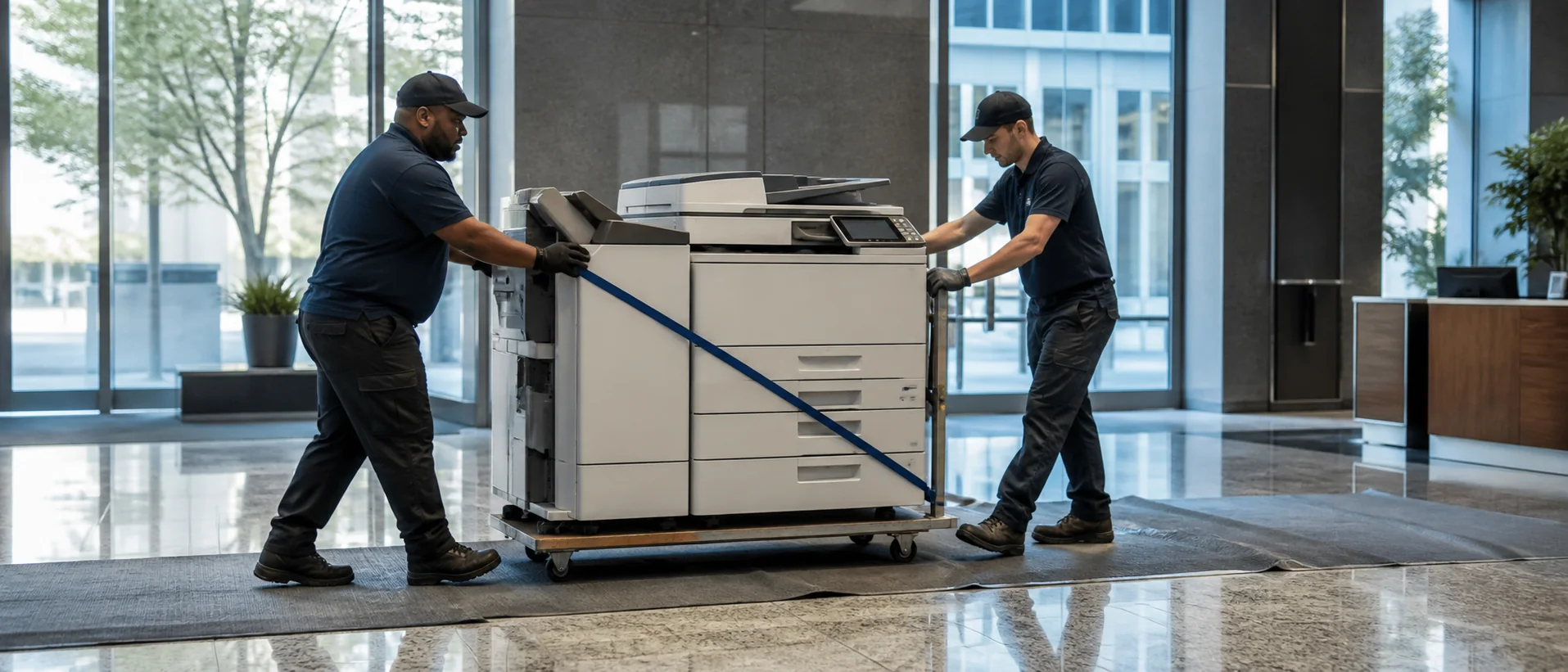
Sacramento copiers for lease should be compared with purchase options using one complete capital-region requirement. State and local government, healthcare and life sciences, higher education, agriculture and food organizations, clean technology, advanced manufacturing, finance, professional services and hospitality all contribute to Sacramento’s document demand. A useful proposal maps the users, security, deadlines and locations first, then prices exact equipment and accountable service.
Build a Sacramento copier requirement for public and private work
Collect meters, tickets and real files from public programs, legal, clinical, research, finance, administrative and operating teams. Include forms, case packets, contracts, grant records, mixed-size scans, technical material, color outreach and confidential personnel pages. Note legislative, budget, enrollment, clinical and event peaks that an annual average can conceal.
Use the copier performance guide to match deadline batches to processing, feeder and paper capacity. Require exact model, controller, drawers, finisher and software. Test a representative record from original pages through searchable, correctly named retrieval in the approved system.
Downtown offices, campuses, hospitals and industrial or food facilities can impose different delivery windows and security rules. Facilities, IT, records owners and daily users should participate in acceptance. One fleet standard should simplify support without forcing every Sacramento team into an unsuitable configuration.
Normalize Sacramento copier prices and public-sector contract details
Separate equipment price, lease total, service base, included pages, overages, software, implementation and training. Add annual escalators, taxes, sanitization, records requirements and end-of-term return. Review copier lease versus purchase on an identical configuration and useful life.
Model normal volume and budget, legislative, grant, reporting, clinical or event peaks. Ask whether pages may be pooled across capital-region addresses and how color, tabloid and specialty output are counted. The office copier cost guide helps compare proposals that package these charges differently.
Require a sample invoice by asset, department and location. Keep the equipment schedule, serial numbers, subscriptions, page minimums and notice dates in a shared contract record. Public and regulated teams should also document ownership of stored data and final sanitization evidence.
Secure Sacramento records and plan deadline continuity
IT should test authentication, secure release, OCR, mixed-size pages and approved destinations. Review encryption, administrator roles, firmware, logs and data removal. The copier service agreement guide can turn broad uptime claims into specific response, parts and escalation duties.
Ask where technicians and common parts are based, how controlled facilities grant access and who coordinates a problem that crosses the copier, identity system and records application. Define supported alternate output for statutory, patient, payroll or public-facing work that cannot miss a deadline.
References should have a comparable campus, agency or compliance load. Ask when users complete workflow returned and what prevented recurrence. Review tickets, pages, successful scans and employee workarounds after the first major deadline, then keep approved test files and settings for upgrades, relocations and the next procurement.
Request Sacramento copier prices on one capital-region scope.
Compare one complete equipment, workflow and service requirement.