
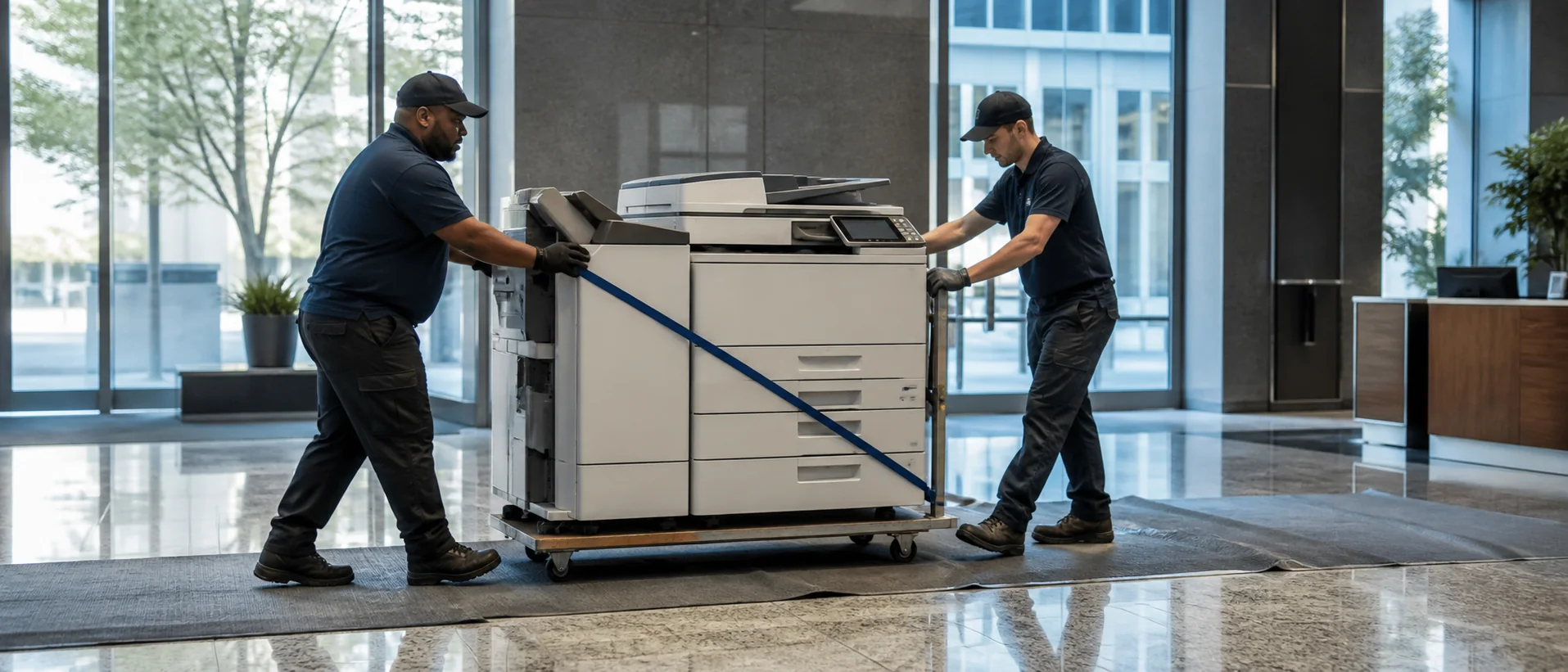
Columbus copiers for lease should be compared with purchase proposals for state government, insurance and finance, healthcare, technology, universities, logistics, retail headquarters, manufacturers and professional firms. Public records, claims, patient forms and distribution documents create different security and availability needs. A credible Franklin County comparison defines those workflows before equipment is selected.
Build Columbus copier requirements for public and corporate work
Collect meters, service tickets and representative files from agencies, insurers, banks, healthcare providers, technology teams, universities, distribution centers, retailers, plants and professional offices. Include public packets, claims, patient forms, financial reports, shipping papers, course material, mixed scans, color marketing and confidential pages. Record hybrid occupancy and central production.
The office copier speed guide connects concurrent deadlines and feeder batches to useful throughput. Require exact model, controller, trays, finisher and workflow applications. Test a routine claim, patient, public or shipping packet through secure release, OCR and retrieval.
Government buildings, hospitals, campuses, towers and distribution facilities have different docks, parking, credentials and hours. Facilities, security, IT and daily users should approve installation.
Compare Columbus copier cost through fiscal and distribution peaks
Separate equipment price, lease total, maintenance base, included pages, overages, supplies, software, implementation and training. Add annual increases, taxes, parking, relocation, data removal and return freight. Consult the commercial copier cost guide so regional service and applications remain visible.
Model normal demand plus legislative, fiscal, claims, clinical, enrollment, retail and shipping peaks. Ask whether pages can be pooled and how another office or warehouse changes coverage. Compare leasing versus purchasing copiers over one useful life.
Require sample invoices and reporting by serial and cost center. Keep accepted configurations, subscriptions, minimums, escalation contacts and notice dates together.
Protect Columbus records and assign system recovery
IT should test authentication, secure print, OCR and approved public, financial, clinical or corporate repositories. Review encryption, administrator privileges, firmware, logs, retention and sanitization. The copier service agreement guide helps assign parts, labor and workflow responsibility.
Ask which technicians serve each property and who owns a fault involving the copier, identity provider or repository. Define alternate output for public filings, claims, patient care, payroll, retail or freight deadlines.
References should share similar access and integrations. Preserve accepted files, metadata and expected results. Columbus organizations adding agencies, clinics, branches or distribution space should price site surveys, configuration, training and page-pool changes before award.
That move-and-add schedule makes future growth auditable and prevents a new address from becoming an unplanned service exception.
Agencies and organizations using grants or cost centers should require billing detail that remains auditable without losing shared page allowances. Ask how accounting codes, service credits and subscriptions appear by device and department. Keeping those rules with accepted workflow evidence gives Columbus procurement teams a better basis for budget reviews, renewals and disputes about work performed at another office.
Price one complete Columbus copier requirement.
Compare equipment, workflow, cost and recovery on equal terms.