
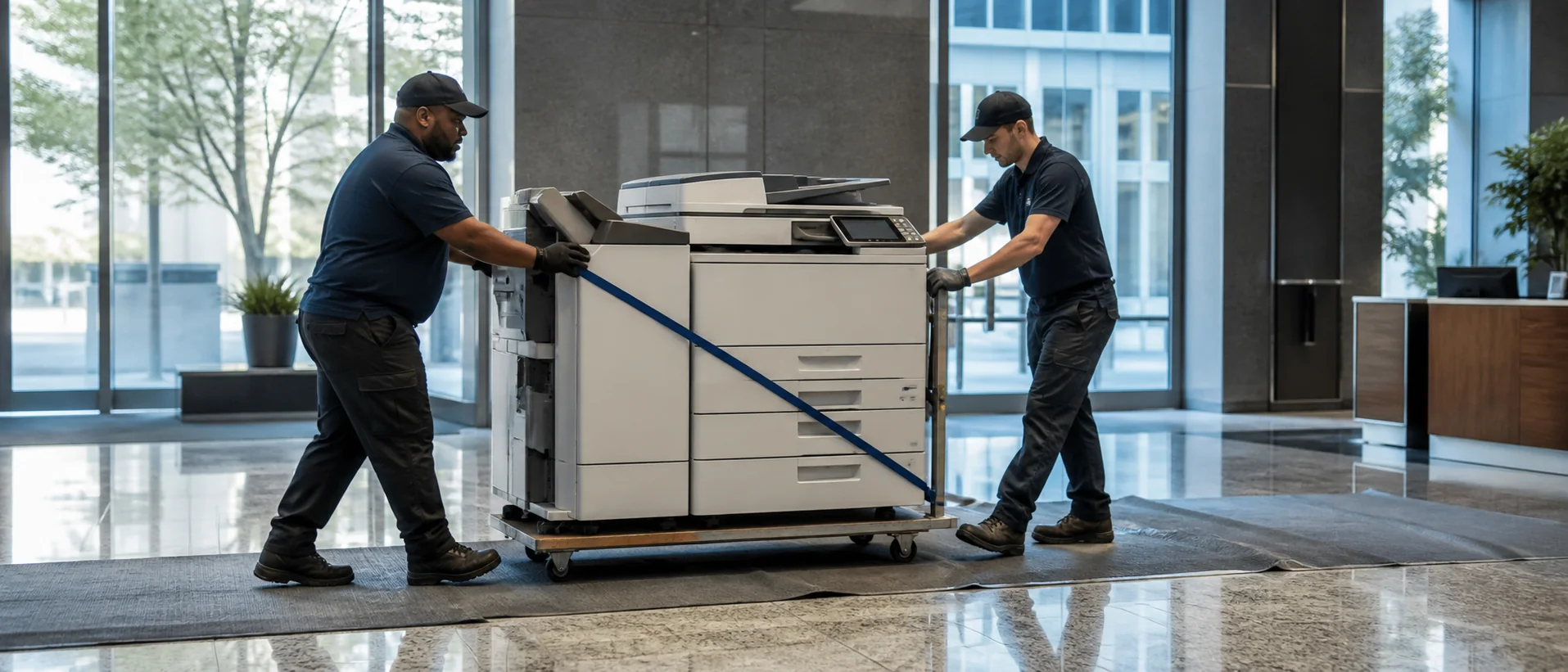
Portland copiers for sale should be evaluated beside lease options for technology and semiconductor firms, healthcare systems, advanced manufacturers, design and creative companies, port and logistics operators, financial firms, nonprofits and professional offices. Technical records, patient files, branded material and shipping documents create different color, security and uptime demands. A strong metro comparison tests them on the proposed system.
Build Portland copier needs around technical and creative workflows
Collect meters, service history and representative files from technology, semiconductor, clinical, manufacturing, design, creative, freight, financial, nonprofit and professional users. Include technical packets, patient forms, quality records, shipping papers, statements, mixed scans, branded color work and confidential pages. Record hybrid occupancy and outside production.
Use the A3 versus A4 copier comparison to decide whether design proofs, technical originals or specialty media justify full-size capacity. Require exact controller, feeder, trays, finisher, color controls and applications. Test a normal technical, patient or brand packet end to end.
Hospitals, fabrication sites, towers, studios, warehouses and port-related facilities have different docks, elevators, parking and security. Facilities, IT and daily users should approve installation.
Compare Portland copier cost across offices and operating sites
Separate equipment price, lease total, maintenance base, included pages, overages, supplies, workflow software, implementation and training. Add annual increases, taxes, parking, credentials, after-hours labor, moves, data removal and return freight. Consult the commercial copier cost guide so no application or route is hidden.
Model normal demand plus product launches, creative deadlines, clinical cycles, production, shipping and fiscal peaks. Ask whether pages can be pooled and how an added office changes coverage. Compare copier leases versus purchases over the same useful life.
Require sample invoices and reporting by serial and cost center. Store accepted options, subscriptions, minimums, service credits and notice dates together.
Protect Portland information and prove full recovery
IT should test identity, secure release, OCR and approved technical, clinical, production or business repositories. Review encryption, administrator privileges, firmware, logs, retention and sanitization. The copier service contract guide helps assign labor, parts and application recovery.
Ask which technicians and parts serve each property and who owns a fault involving copier, identity or destination. Define alternate output for patient care, design, production, shipping, payroll and client deadlines.
References should share similar access and integrations. Preserve accepted files, metadata, color settings and expected results. Portland design teams should approve representative brand files on the actual stock and record controller and finishing settings instead of relying on a showroom sample.
Retest those standards after driver, firmware or paper changes so replacement output remains measurable.
Hybrid and multi-office teams should compare demand by occupied day and address rather than relying on annual page totals alone. Price secure release, remote administration, branch moves and page-pool changes before award. A written move-and-add schedule gives Portland finance and IT teams a consistent method for evaluating growth, acquisitions or workspace consolidation without reopening every contract assumption.
Price one complete Portland copier requirement.
Compare equipment, workflow, cost and recovery on equal terms.