
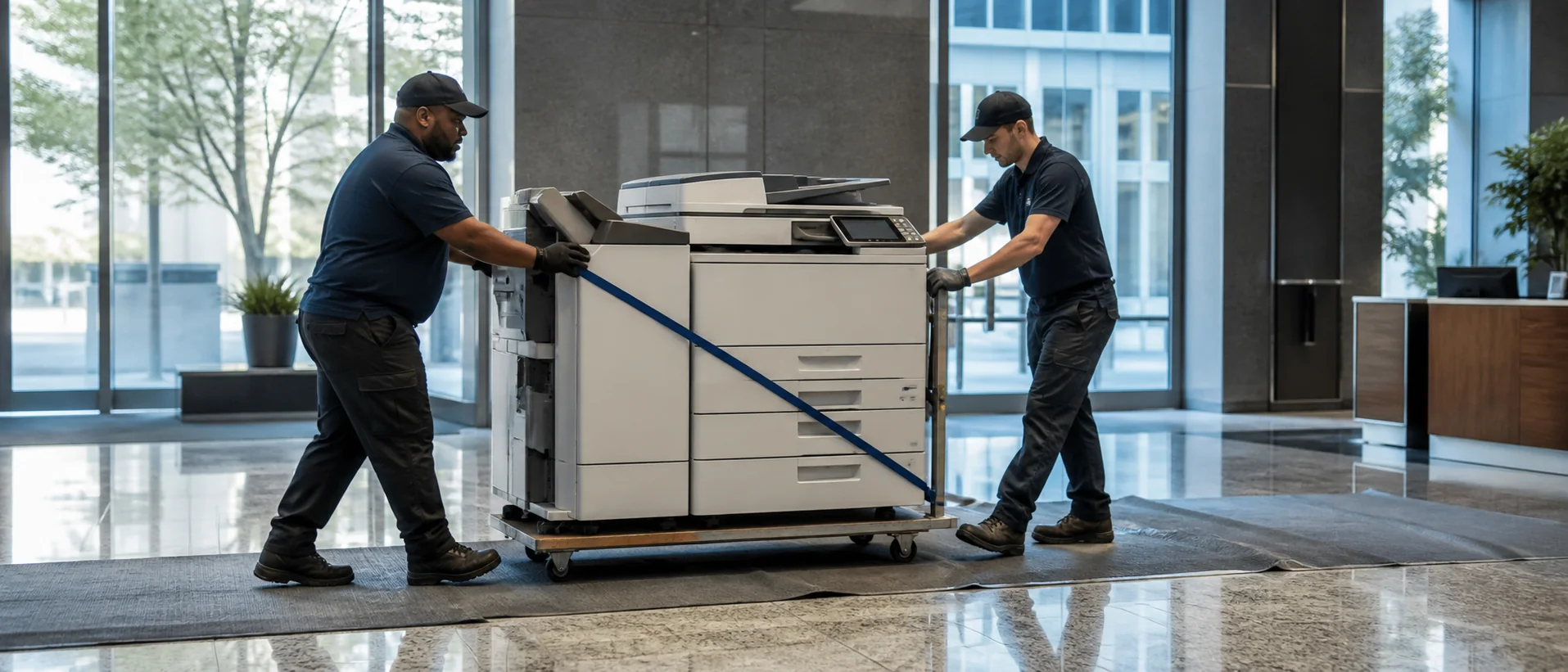
Houston copiers for sale should be evaluated beside lease options for energy companies, healthcare and life-science organizations, port and logistics operators, aerospace firms, manufacturers, financial companies, universities, construction groups and professional offices. Field reports, patient records, engineering packets and freight documents require different security and recovery times. A strong Harris County comparison tests them before price determines the fleet.
Build Houston copier needs for energy, clinical and port work
Collect meters, service history and representative files from energy, engineering, hospitals, laboratories, port and freight teams, aerospace, manufacturing, finance, academic, construction and professional users. Include field reports, safety packets, patient forms, research records, technical documents, shipping papers, financial files, mixed scans and confidential pages. Record hybrid and outsourced output.
Use the A3 versus A4 copier guide to decide whether plans, technical originals or specialty stock justify full-size capacity. Require exact controller, feeder, trays, finisher and applications. Test a normal field, patient or shipping packet end to end.
Medical campuses, laboratories, refineries, port sites, towers and construction offices have different docks, shifts, safety and credentials. Facilities, security, IT and users should approve installation.
Compare Houston copier costs across buildings and operations
Separate cash price, lease total, maintenance base, included pages, overages, supplies, software, implementation and training. Add annual increases, taxes, parking, credentials, after-hours labor, moves, sanitization and return freight. Consult the commercial copier pricing guide so every workflow and route remains visible.
Model normal demand plus energy, turnaround, clinical, research, vessel, production and fiscal peaks. Ask whether pages can be pooled and how another office, clinic or site changes support. Compare copier leasing with purchasing over one useful life.
Require sample invoices by serial, property and cost center. Store accepted configurations, subscriptions, minimums, service credits and notice dates together.
Secure Houston information and prepare resilient recovery
IT should test authentication, secure release, OCR and approved energy, clinical, research, logistics or financial repositories. Review encryption, administrator privileges, firmware, logs, retention and data removal. The copier service contract guide helps assign parts, labor and application recovery.
Ask which technicians can enter each property and who owns a fault spanning device, identity and destination. Define backup output for field operations, patient care, research, freight, transactions and payroll.
References should match industrial, high-rise or clinical access. Preserve accepted files, metadata and results. Houston continuity plans should identify approved temporary equipment, data handling and priority workflows during storm-related closures.
Test contacts before hurricane season and price emergency delivery, credentials and configuration. A replacement must reproduce the critical process, not merely print.
Require the same acceptance test after moves or application changes.
Regulated teams should define retention for stored jobs, address books, audit logs and device data before approval. Require sanitization evidence and preserve successful authentication profiles. This lets Houston buyers compare privacy duties beside price and speeds validation after security changes.
Price one complete Houston copier requirement.
Compare equipment, workflow, cost and recovery on equal terms.