
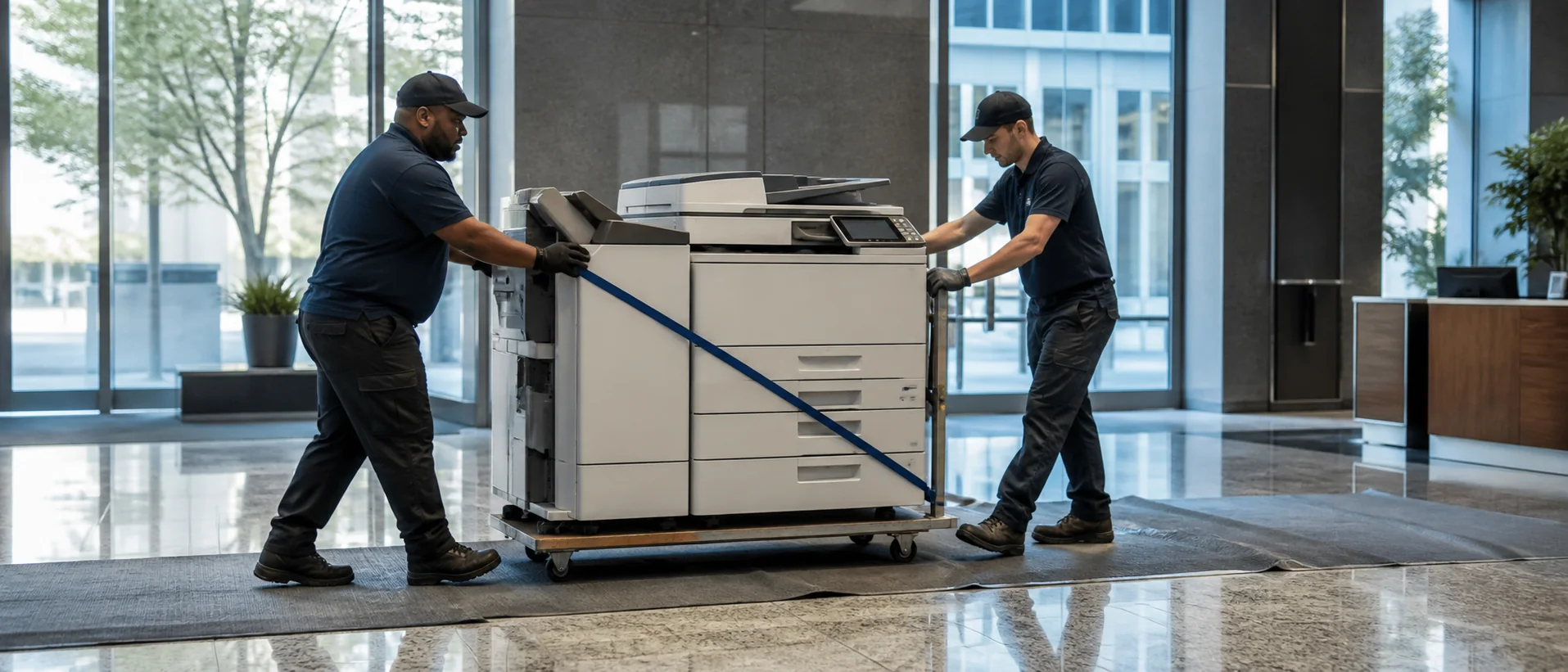
Kirkland office copier dealer proposals should fit technology and software firms, healthcare providers, professional practices, financial companies, schools, retailers, real-estate groups and regional offices. Product records, patient forms, contracts and presentation files have different security and color needs. A practical Eastside comparison tests those workflows and makes growth, applications and recovery explicit.
Specify Kirkland copiers for technology, healthcare and client work
Gather meters, ticket history and actual files from software, technology, clinical, finance, legal, sales, education, property, retail and professional teams. Include contracts, product packets, patient forms, statements, proposals, color proofs, mixed scans and confidential pages. Record hybrid output and outside production.
Use the copier sizing guide to connect simultaneous users and feeder batches to practical capacity. Require exact model, controller, drawers, finisher and applications. Test a normal contract, patient or client packet through authentication, OCR and retrieval.
Medical offices, technology suites, schools and mixed-use properties have different loading, parking, security and hours. Facilities, IT and users should approve delivery.
Compare Kirkland copier cost with expansion in view
Request purchase price, lease total, service base, included pages, overages, supplies, software, implementation and training separately. Add annual escalators, taxes, parking, moves, data removal and return freight. The office copier pricing guide keeps workflow and access obligations visible.
Model routine demand plus product, clinical, audit, sales, enrollment and fiscal peaks. Ask how another suite or clinic changes page pools, licensing and response. Compare leasing versus purchasing copiers over one useful life.
Require invoices by serial, site and department. Keep accepted configurations, subscriptions, minimums, service credits and notice dates together.
Secure Kirkland information and make changes testable
IT should test identity, secure release, OCR and approved technology, clinical, financial or business repositories. Review encryption, administrator privileges, firmware, logs, retention and sanitization. The copier maintenance agreement guide helps assign workflow recovery.
Ask which technicians serve each property and who owns a failure spanning copier, identity and destination. Define alternate output for patient care, transactions, client work, product deadlines and payroll.
References should match growing Eastside organizations and integrations. Preserve accepted files, profiles, metadata and results. Require the same tests after a Kirkland move, network change or repository migration.
Before delivery, document access, power, network ownership and the person who signs off each destination. Define stored-job retention and end-of-term sanitization before approval.
Technology and healthcare teams should keep approved contract, patient and repository samples with expected metadata. Require sanitization evidence when equipment leaves service and preserve successful authentication profiles. This Kirkland record makes privacy obligations auditable and shortens recovery after identity, application or network changes.
For product, clinical and client deadlines, name the maximum tolerable interruption and approved overflow location. Test that handoff with secure files before a busy period.
Color-dependent teams should approve output on actual stock, recording controller and finishing settings with the local person authorized to accept final documented results.
Price one complete Kirkland copier requirement.
Compare equipment, workflow, cost and recovery on equal terms.