
San Francisco office copier dealer proposals should account for dense offices, hybrid teams and the city’s technology, financial, professional, scientific, government, healthcare, nonprofit, hospitality and creative organizations. Many local buyers need fewer devices than before but expect stronger scanning, identity and records integration from each one. A useful comparison measures the current workflow, building constraints, full-term cost and Bay Area service response rather than repeating an old fleet count.
Right-size San Francisco copiers for hybrid and records-heavy offices
Gather meters, ticket history and actual files by floor and team. Include contracts, regulatory records, client packages, patient forms, mixed-size scans, presentations and confidential personnel pages. Record home-office shifts, outsourced color and manual document handling; average pages alone cannot show whether a device is oversized or missing an essential workflow.
The office copier sizing guide helps connect occupancy patterns and deadline batches to feeder, processor and paper capacity. Require exact model, controller, trays, finisher and licenses. Test normal documents through identity, searchable text, naming and the final approved repository.
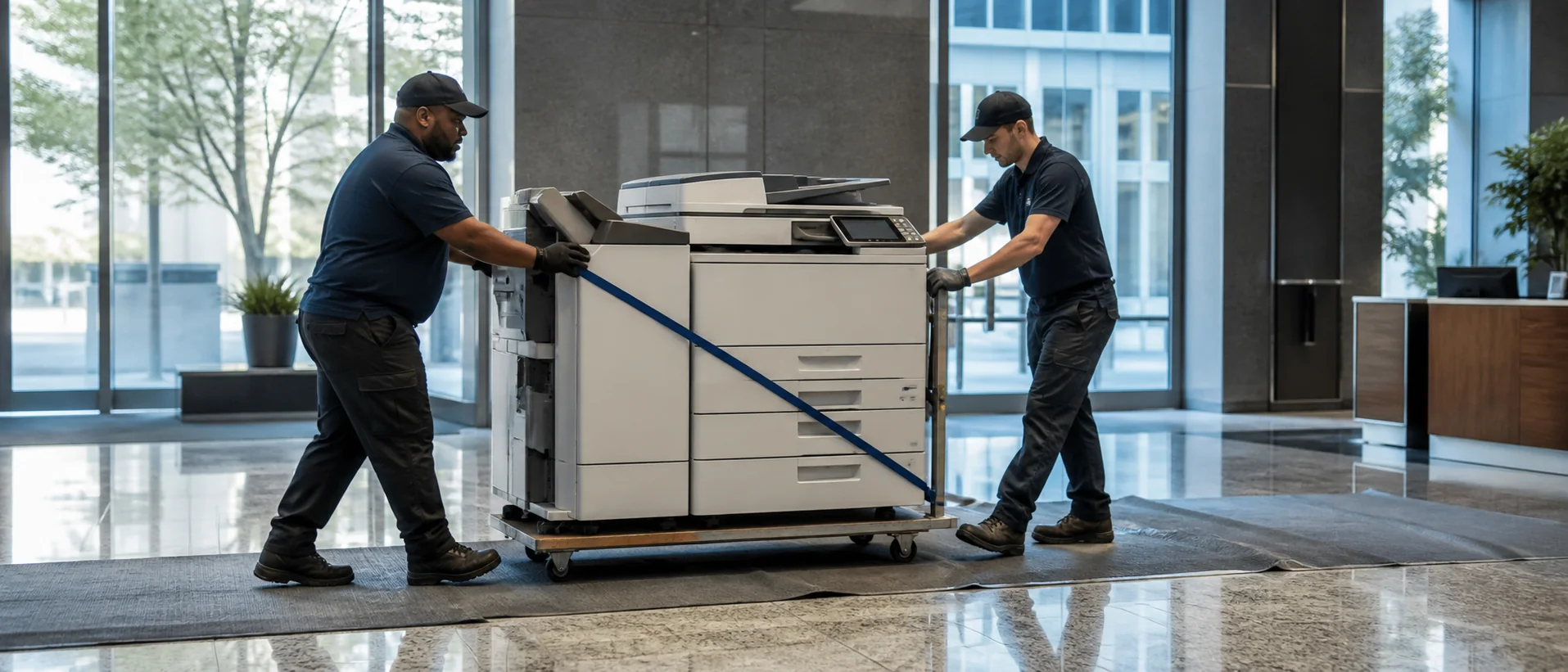
High-rise loading rules, freight elevators, union or security procedures and limited floor space belong in the requirement. Facilities, IT and daily users should validate delivery and placement. A compact machine is not a bargain when it cannot process the longest scan or support the controlled destination.
Compare San Francisco copier leasing and cost as offices change
Separate equipment price, lease total, service base, included pages, overages, software, installation and training. Add annual escalators, taxes, building-access charges, relocation, sanitization and return freight. Review copier leasing versus buying with an honest assumption about future floors, headcount and useful life.
Model normal hybrid occupancy and audit, filing, board, clinical or event peaks. Ask how pages are pooled among Bay Area sites and whether a device may be moved or removed without disturbing financing or service. The office copier price guide gives each alternative a common total-cost frame.
Require sample invoices by asset and floor. Store the equipment schedule, serials, subscriptions and notice dates in one accessible record. Quarterly utilization review can identify a machine that should be consolidated, reassigned or reconfigured before renewal.
Protect San Francisco information and assign technical ownership
IT should test secure release, user authentication, OCR and approved cloud or network destinations. Review encryption, administrative roles, firmware, audit settings and data removal. The commercial copier security guide helps regulated and client-facing firms record acceptance.
Ask which technicians serve the building, how they gain access and who coordinates a failure that crosses hardware, identity and a records platform. Define approved alternate output for client, legal, patient, payroll or regulatory documents. The continuity path must work for the reduced staff actually present.
References should share similar building rules or integration needs. Ask when users could complete the whole task and how a repeat issue was prevented. After sixty days, review successful scans, tickets, costs and workarounds; preserve known-good test files before any driver, firmware or identity change.
Compare San Francisco copier prices for the office you operate now.
Compare one complete equipment, workflow and service requirement.