
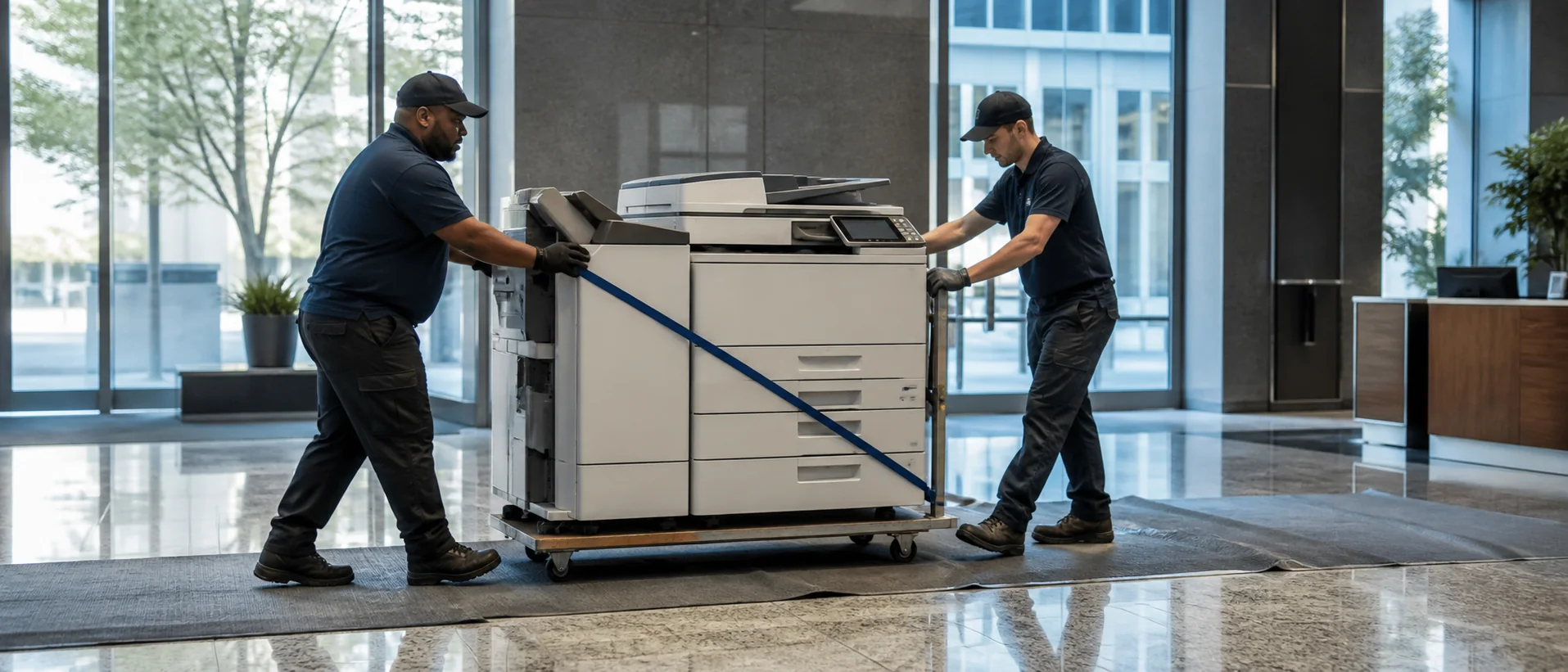
Albuquerque office copier dealer proposals should fit national-laboratory and research organizations, aerospace and defense-related operations, healthcare providers, universities, government, technology, construction and professional offices. Technical records, patient forms, controlled project files and public documents create different security and deadline needs. A useful Bernalillo County comparison tests those workflows and prices exact equipment, access and recovery.
Specify Albuquerque copiers for research and healthcare
Gather meters, tickets and files from research, engineering, defense-related, clinical, academic, public, technical and construction users. Include technical packets, inspection records, patient forms, grant documents, plans, mixed scans, color safety material and confidential pages. Record desktop output and work moved during failures.
The A3 versus A4 copier guide helps decide whether technical originals justify full-size capacity. Require exact feeder, controller, trays, finisher and software. Test a real technical, patient or project packet through authentication, OCR and retrieval.
Laboratories, secured facilities, hospitals, campuses and public buildings have different docks, heat, dust, power and access. Facilities, safety, security, IT and users should approve installation. Include research, clinical and project hours.
Compare Albuquerque copier pricing across projects and sites
Request equipment price, lease total, service base, included pages, overages, supplies, software, setup and training separately. Add annual increases, taxes, credentials, travel, moves, data removal and return freight. The commercial copier cost guide keeps controlled-site obligations visible.
Model normal demand plus research submissions, project, clinical, construction and fiscal-year peaks. Ask whether pages can be pooled and where common parts are stocked. Compare copier leasing versus purchase over one useful life.
Require invoices by device and address. Store serials, options, subscriptions, minimums and notice dates together. Review cost and recovery after the first project peak.
Protect Albuquerque records and technical continuity
IT should test secure release, identity, OCR and approved technical, clinical or public repositories. Review encryption, administrator roles, firmware, logs and sanitization. The copier security guide supports controlled and confidential information.
Ask which technicians and parts serve each property, how secured areas grant access and who owns a failure involving the copier, identity or repository. Define alternate output for research, patient care, projects, payroll or public deadlines.
References should have similar access and integrations. Ask when users could complete the full workflow and whether the repair held. Preserve accepted files and expected results.
Acceptance should distinguish basic output from repository approval. Verify scale, OCR, naming, authorization and retrieval on actual records, then preserve working settings for later updates.
Albuquerque organizations supporting distant New Mexico sites should require route terms by address, including mileage, remote triage, parts and replacement equipment.
Before delivery, facilities teams should document dock or entrance use, restricted-floor procedures, power, network ownership and the path for future service visits. This gives every provider the same definition of completed installation and reduces change charges.
Technical teams should include large originals, heavier media and controlled packets in the demonstration. Record image scale, scan accuracy, permissions and operator steps so the accepted workflow can be reproduced after training, firmware changes or device replacement.
Price one complete Albuquerque requirement.
Compare equipment, workflow, cost and recovery.