
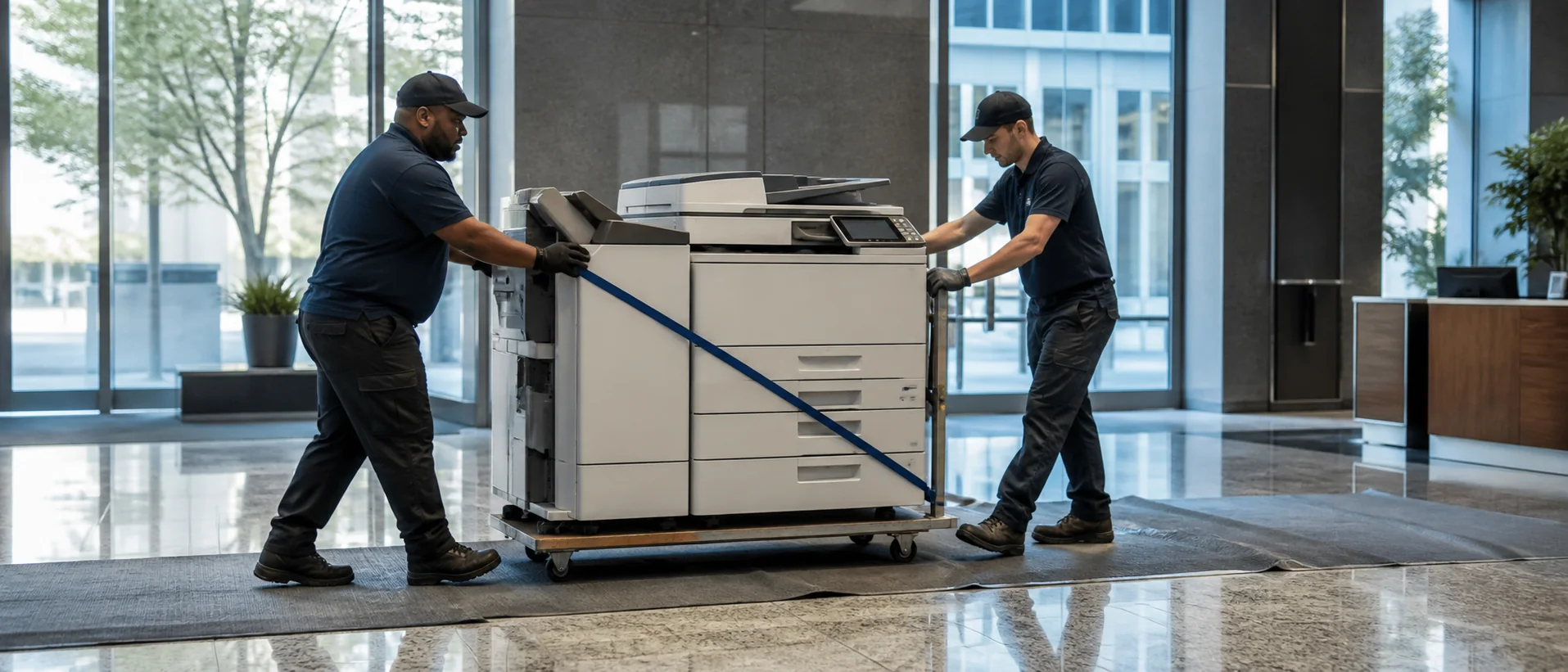
Philadelphia copiers for sale should be evaluated beside lease options for healthcare and life sciences, universities and research, finance and legal firms, government agencies, port logistics, manufacturers, hospitality groups, nonprofits and professional offices. Patient records, filings, research packets and shipping documents require different security and deadline controls. A credible city comparison tests them on the proposed system.
Build Philadelphia copier needs around regulated deadline work
Collect meters, service history and representative files from hospitals, laboratories, universities, banks, law firms, agencies, port and freight operators, manufacturers, hotels, nonprofits and professional offices. Include patient packets, research records, pleadings, financial reports, public files, shipping papers, mixed scans, color presentations and confidential pages. Record hybrid and outsourced output.
Use the copier speed guide to connect concurrent clinical, filing and scan deadlines to useful throughput. Require exact model, controller, feeder, drawers, finisher and workflow applications. Test a normal patient, legal or research packet through authentication, OCR and retrieval.
Medical campuses, laboratories, towers, courts, warehouses and hotels have different docks, elevators, parking, credentials and hours. Facilities, security, IT and records owners should approve installation.
Compare Philadelphia copier pricing across buildings and departments
Request cash price, lease total, maintenance base, included pages, overages, supplies, software, implementation and training separately. Add annual increases, taxes, parking, union or restricted access, after-hours labor, relocation, sanitization and return freight. Consult the office copier cost guide so the complete obligation remains visible.
Model normal demand plus clinical, research, legal, audit, shipping, hospitality and fiscal peaks. Ask whether pages can be pooled and how an added office changes support. Compare copier leasing with purchasing over one useful life.
Require sample invoices by serial, building and cost center. Store accepted options, subscriptions, minimums, service credits and notice dates together.
Protect Philadelphia information and prove full restoration
IT should test secure release, identity, OCR and approved clinical, research, legal, financial or public repositories. Review encryption, administrator privileges, firmware, logs, retention and sanitization. The commercial copier security guide supports protected and confidential records.
Ask which technicians can enter each property and who owns a fault spanning device, identity and destination. Define alternate output for patient care, filings, research, shipping, payroll and public deadlines.
References should match high-rise or institutional access and integrations. Preserve accepted files, metadata and expected results. Philadelphia organizations should require end-of-term evidence for stored jobs, address books, audit logs and device data, not only a promise that equipment will be removed.
Keep successful authentication and repository profiles so security changes can be measured against an accepted workflow.
Price branch moves and additions before award to make regional growth predictable.
Legal, clinical and public teams should record retention for stored jobs, address books, logs and device data before approval. Require evidence of sanitization and preserve successful authentication profiles. That record lets Philadelphia buyers compare privacy duties beside price and shortens recovery after network or security changes.
Price one complete Philadelphia copier requirement.
Compare equipment, workflow, cost and recovery on equal terms.