
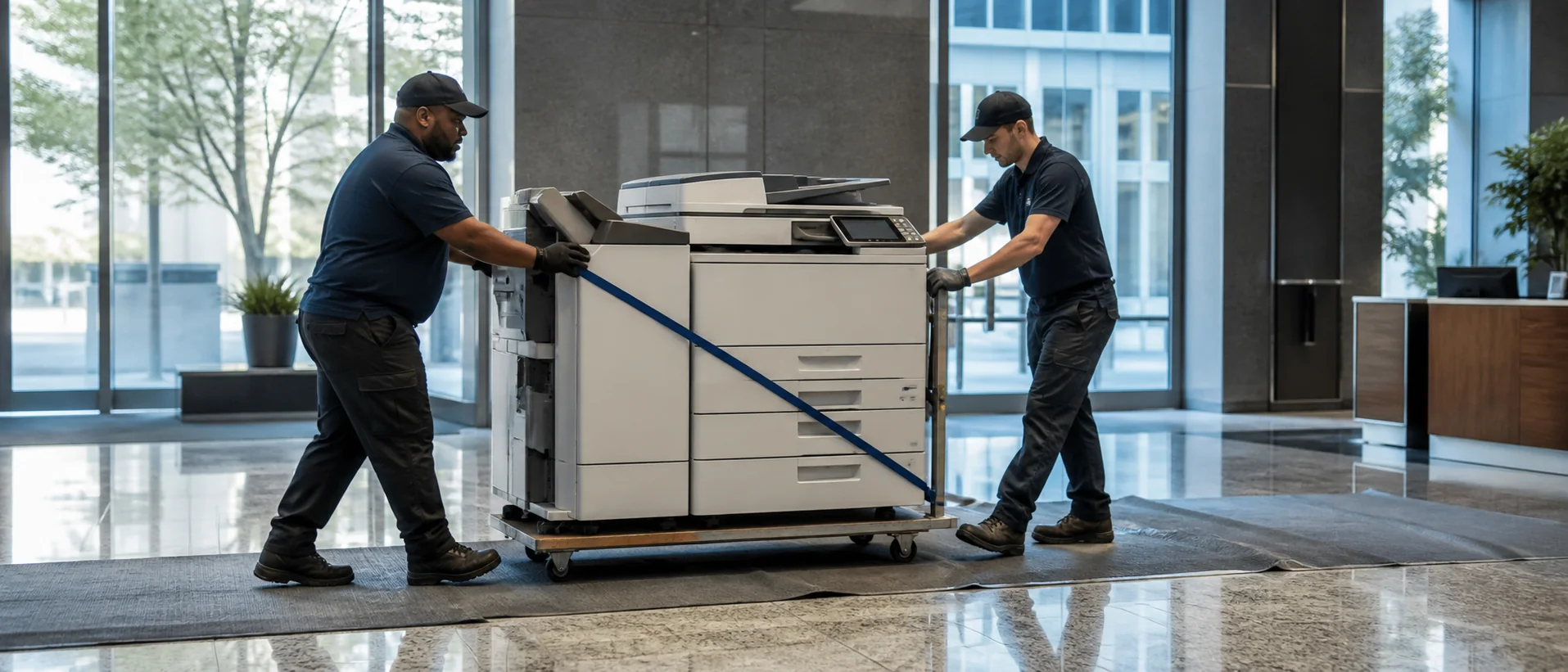
Sioux Falls copiers for sale should be evaluated beside lease options for financial and insurance firms, healthcare systems, agriculture and food businesses, manufacturers, logistics operators, technology companies, universities, government agencies and professional offices. Patient records, transaction files, quality documents and shipping papers have different security and uptime consequences. A credible Minnehaha County comparison tests those workflows first.
Build Sioux Falls copier needs for finance, clinical and food work
Collect meters, service history and representative files from banks, insurers, hospitals, agriculture, food production, manufacturing, freight, technology, academic, public and professional users. Include transaction packets, claims, patient forms, food-quality records, work orders, shipping papers, mixed scans, color presentations and confidential pages. Record hybrid and outsourced output.
Use the copier speed guide to connect concurrent financial, clinical and scan deadlines to practical throughput. Require exact model, controller, feeder, drawers, finisher and applications. Test a normal claim, patient or quality packet through secure release, OCR and retrieval.
Hospitals, towers, food plants, warehouses and campuses have different docks, sanitation, parking and hours. Facilities, security, IT and users should approve delivery and acceptance.
Compare Sioux Falls copier costs across departments and shifts
Separate cash price, lease total, service base, included pages, overages, supplies, software, implementation and training. Add annual increases, taxes, parking, after-hours support, relocation, sanitization and return freight. Consult the commercial copier pricing guide so full obligations remain visible.
Model normal demand plus audit, claims, clinical, food-production, shipping, enrollment and fiscal peaks. Ask whether pages can be pooled and where technicians and parts are stocked. Compare copier leasing with buying over one replacement cycle.
Require sample invoices by serial and cost center. Keep accepted options, subscriptions, minimums, service credits and notice dates together.
Protect Sioux Falls data and verify complete restoration
IT should test authentication, secure print, OCR and approved financial, clinical, production or public repositories. Review encryption, administrator privileges, firmware, logs, retention and sanitization. The copier security guide supports protected financial, patient, technical and personnel information.
Ask which technicians and parts serve each shift and who owns a fault spanning copier, identity and repository. Define alternate output for transactions, patient care, production, shipping, payroll and public deadlines.
References should match regulated access and integrations. Preserve accepted files, metadata and results. Sioux Falls financial and healthcare teams should define retention for stored jobs, address books, audit logs and device data, with documented end-of-term sanitization.
Keep successful authentication and scan profiles so later security changes can be tested against an accepted workflow. Price moves and added branches before award.
Review the recovery record with compliance and daily users each quarter.
Food and manufacturing teams should document specialty stock, barcode behavior, long scan batches and the maximum interruption at each critical station. Ask the dealer to demonstrate those files during a real shift and retain accepted settings so temporary equipment can reproduce the required process.
Price one complete Sioux Falls copier requirement.
Compare equipment, workflow, cost and recovery on equal terms.