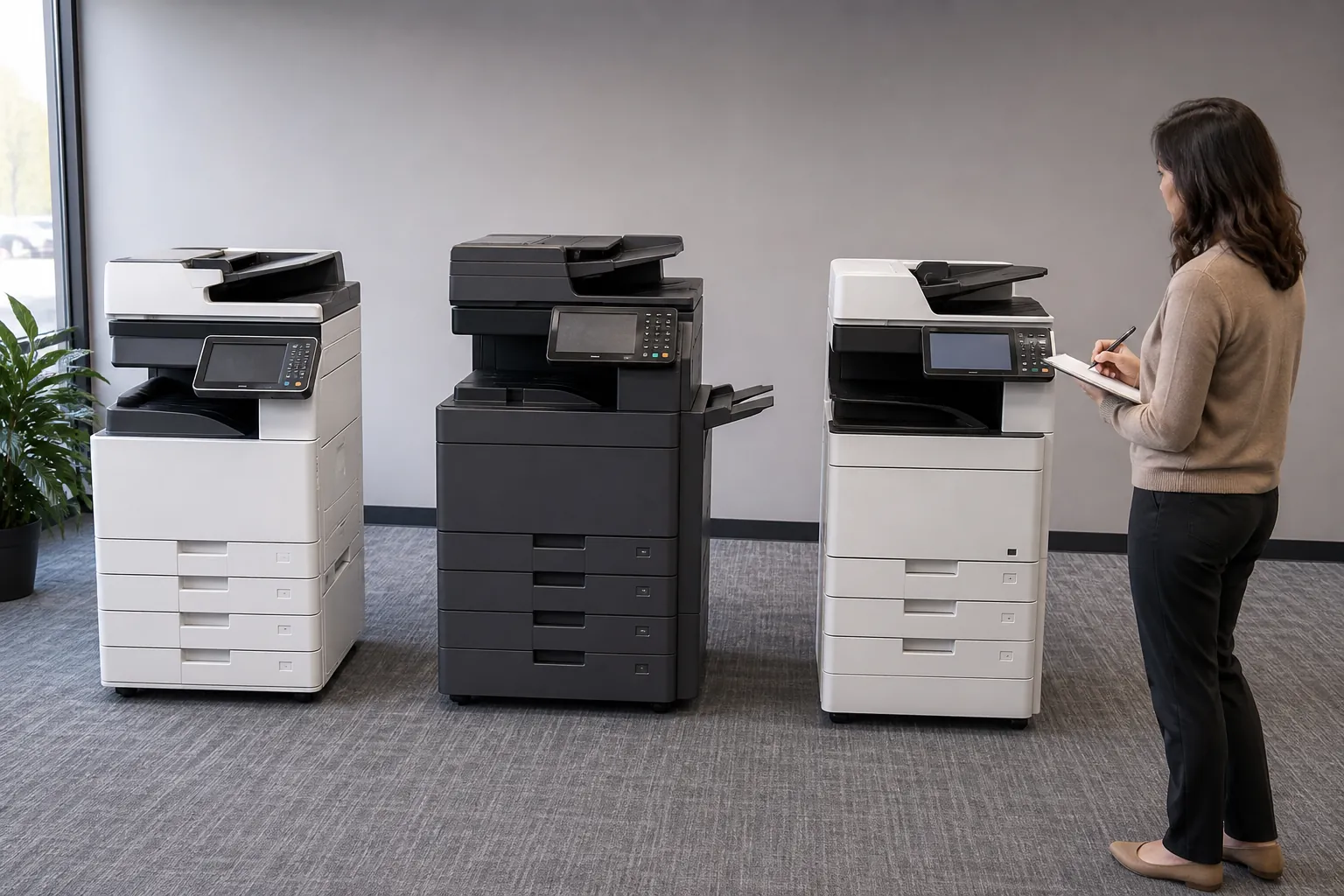
How many office copiers does my business need?
The number of office copiers should be based on users, monthly and peak pages, walking distance, scan demand, critical departments and outage risk. One larger copier may be efficient for a compact office, while multiple right-sized devices can reduce queues and provide continuity across floors, shifts or buildings. Model placement before counting machines.
Use this answer to define the requirement, expose meaningful differences among proposals and verify the equipment, service or contract term that supports each claim.
Calculate copier quantity from demand, distance and downtime
Map the office and score each work area on:
- Average and busiest-hour print volume
- Large scan batches and deadline jobs
- Required color, paper and finishing
- Secure or departmental access
- Walking time and floor restrictions
- Work that cannot wait during an outage
Use the copier sizing guide for each demand cluster. Compare one central system with a small fleet using five-year cost and recovery, then obtain copier quotes for the same placement plan.
Turn this copier question into a written requirement
Write the answer into the request for proposal, including the measurement or contract term that proves it. Ask every provider to identify the exact option, setting, service obligation or workflow assumption behind the recommendation. Keep the response with the configuration sheet for installation and future account reviews.
Measure office copier workload before selecting a model
Use several representative months of meter or print-management data. Separate black-and-white and color impressions, identify busy periods and include work currently outsourced. Maximum duty cycle is not a substitute for a recommended operating range.
Use the office copier sizing guide to structure the review.
Price the equipment around one clear workload.
Give providers the same volume, paper, scanning, finishing and service brief.
Check the provider behind the copier configuration
Ask how the dealer installs this requirement, trains users, stocks parts and handles repeated problems. Compare response territory, escalation and continuity rather than accepting a general service promise. The exact hardware matters, but the provider determines whether its capabilities remain available during daily work.
Define an acceptance test before delivery
Write the small set of results that must work on installation day: required paper, authenticated printing, scan destinations, finishing, reporting or another critical task. Use named users and real documents. Hold configuration and training open until the test passes, and retain the record with the equipment schedule.
Plan for changes during the copier life cycle
Consider higher and lower volume, staff changes, office moves, software updates and the eventual return, resale or retirement of the machine. Identify which parts of the configuration can expand and which require replacement. A decision is stronger when the exit path is understood before the first invoice arrives.
Connect this answer to the complete copier decision
Research how many office copiers does my business need alongside the office copier prices guide, copier lease versus buy comparison, Office Copier Buyer’s Guide, current copier brand guide and local copier pricing directory. Use the office copier answer library for narrower contract and feature questions, then carry one consistent requirement into the copier quote request.
- Average and peak monthly pages
- Users and typical job size
- Color and paper-size requirements
- Scanning and finishing workflow
- Security and administration
- Complete equipment and service cost
Related buyer questions worth resolving
Closely connected decisions include What is copier cost per page, What is the difference between a copier and a multifunction printer, How long does an office copier last and How much does it cost to lease an office copier. Resolve them before comparing final proposals so price, capacity, service and contract assumptions stay aligned.
