
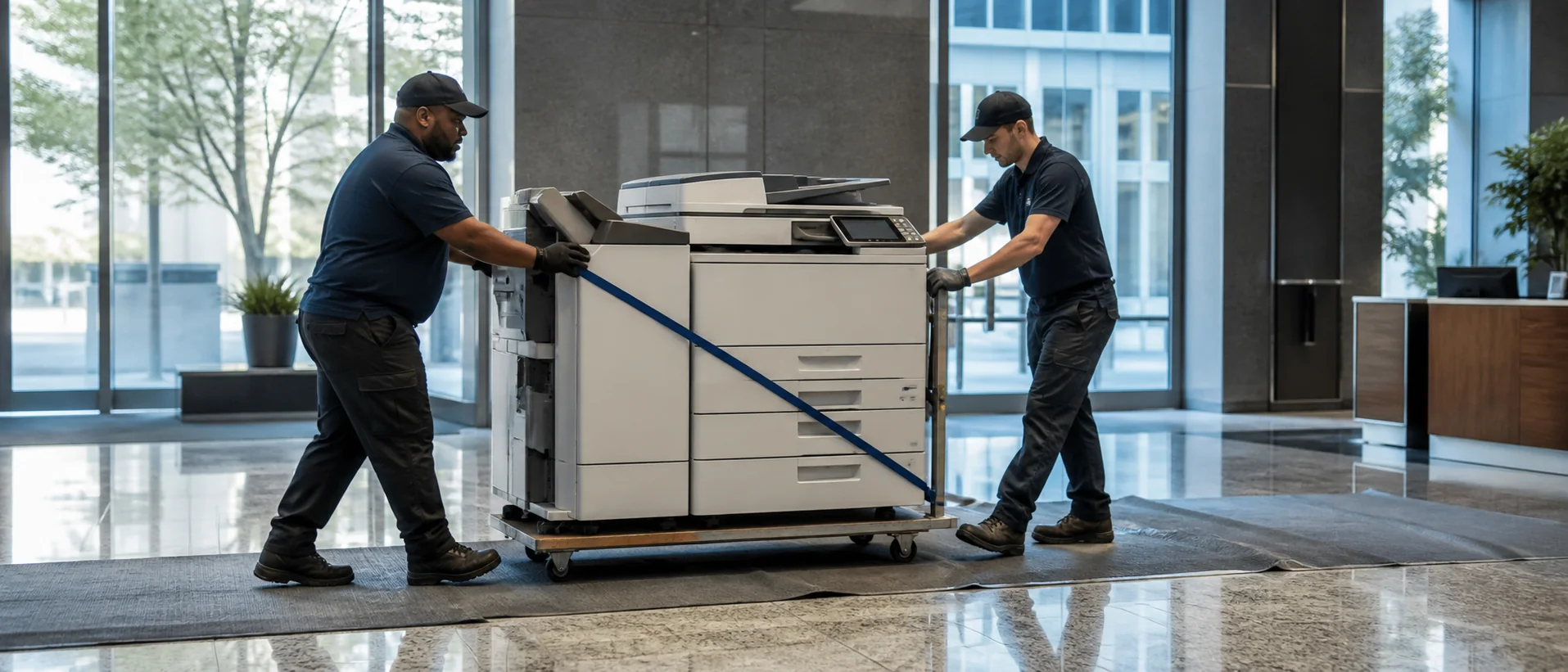
Virginia copiers for lease should be compared with purchase proposals for federal contractors and technology firms in Northern Virginia, defense and port operations in Hampton Roads, finance and government offices around Richmond, healthcare networks, universities, manufacturers, logistics companies and professional practices statewide. Controlled records, patient files, legal packets and shipping documents demand different security and recovery. A useful comparison prices every route, credential and workflow instead of treating Virginia as one service zone.
Build a Virginia copier standard from the work at each address
Collect meters, tickets and representative files by facility. Include controlled packets, contracts, patient forms, legal records, financial reports, engineering documents, shipping papers, production files, course material, public forms, mixed scans and confidential pages. Record outside production and the work moved during failures.
The office copier buyer’s guide turns those files into capacity, feeding, finishing and acceptance requirements. Require exact models, controllers, drawers, finishers and applications. Test an ordinary controlled, clinical, legal or freight packet through authentication, OCR and approved retrieval.
Secured campuses, hospitals, downtown towers, shipyards, plants, ports, schools and rural offices have different docks, credentials, safety and connectivity. Facilities, security, IT, records owners and users should approve delivery and acceptance.
Compare Virginia copier prices with routes and compliance included
Separate purchase price or lease total from maintenance base, included pages, overages, supplies, software, implementation and training. Add annual increases, taxes, parking, travel zones, after-hours labor, moves, sanitization and return freight. The commercial copier price guide keeps route and workflow obligations visible.
Model routine demand plus contract, legislative, clinical, port, production, tourism, enrollment and fiscal peaks. Ask whether pages can be pooled, where technicians and parts are based and which sites require cleared personnel. Compare copier leasing versus purchasing over one useful life.
Require invoices by serial, address and department. Keep accepted configurations, subscriptions, minimums, travel rules, service credits and notice dates together.
Protect Virginia records and assign statewide recovery ownership
IT should test identity, secure print, OCR and approved controlled, clinical, financial or public repositories. Review encryption, administrator privileges, firmware, logs, retention and data removal. The copier security checklist supports regulated and confidential information.
Ask providers to map technicians, parts, credentials, hours and escalation for every property. Define alternate output for mission work, patient care, transactions, shipping, production, payroll and public deadlines. Name approved temporary equipment and who can authorize access.
References should match Virginia geography and integrations. Preserve accepted files, profiles and results with each asset. Price moves and additions before award so a new branch, clinic or project office follows the same secure standard.
Before delivery, document entrances, approved work windows, power, connectivity and local validators. Review the statewide record after identity, application, staffing or location changes.
Keep approved continuity files and current site contacts in one statewide asset record. That evidence should travel with every move, renewal and replacement.
Price one statewide requirement without hiding local work.
Compare equipment, workflow, cost and recovery on equal terms.