
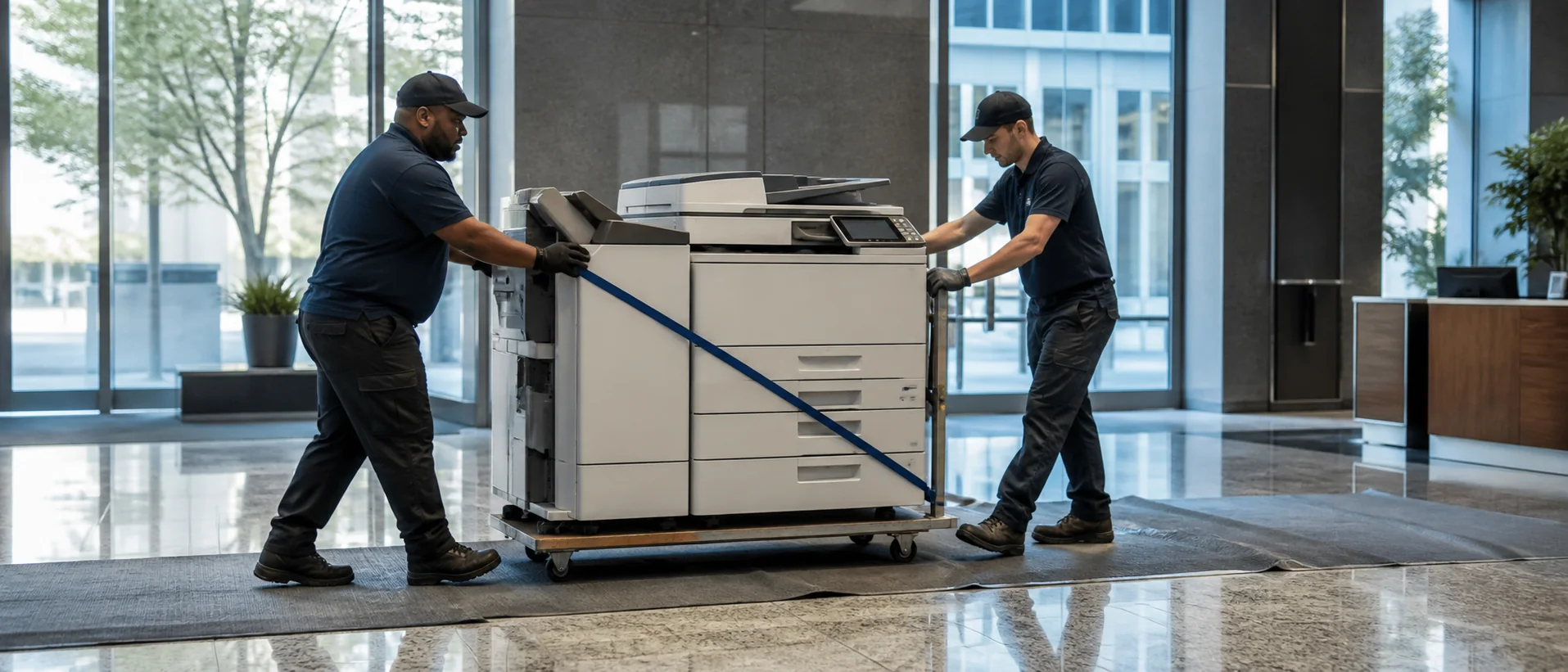
Hampton copiers for lease should be compared with purchase proposals for aerospace and defense organizations, research groups, healthcare providers, universities, tourism businesses, government agencies, schools and professional offices. Technical reports, controlled documents, patient records and visitor materials create different security and finishing needs. A credible Peninsula comparison tests those workflows and includes access, seasonal demand and recovery.
Specify Hampton copiers for aerospace, research and clinical work
Gather meters, service history and actual files from aerospace, defense, research, clinical, academic, tourism, public and professional users. Include technical reports, controlled packets, grant files, patient forms, course material, visitor brochures, mixed scans and confidential pages. Record outside work used during deadlines.
Use the A3 versus A4 copier comparison to decide whether drawings, maps or presentation media justify full-size capacity. Require exact controller, feeder, trays, finisher and applications. Test a normal technical, research or patient packet end to end.
Secured campuses, laboratories, hospitals, hotels and schools have different docks, credentials and hours. Facilities, security, IT and daily users should approve installation.
Compare Hampton copier prices through research and visitor peaks
Separate cash price, lease total, maintenance base, included pages, overages, supplies, software, implementation and training. Add annual increases, taxes, access labor, moves, sanitization and return freight. The office copier price guide keeps workflow and service obligations visible.
Model normal demand plus research, contract, clinical, tourism, enrollment and fiscal peaks. Ask where technicians and common parts are based and whether pages can be pooled across Peninsula sites. Compare lease and purchase costs over one realistic life.
Require invoices by serial and property. Store accepted options, subscriptions, minimums, service credits and notice deadlines together.
Protect Hampton records and verify credentialed recovery
IT should test secure release, identity, OCR and approved technical, research, clinical or public repositories. Review encryption, administrator roles, firmware, logs, retention and data removal. The copier security checklist supports controlled and protected information.
Ask which technicians possess required credentials and who owns a fault involving device, identity or repository. Define backup output for mission work, research, patient care, students, guests and payroll.
References should match secured access and the proposed integrations. Preserve accepted files, color settings, metadata and results. Hampton teams should document the approved entrance, work window, power, network owner and person who signs off each destination.
Price temporary equipment and after-hours configuration before award. Require the same acceptance test after firmware, identity or application changes.
Research and controlled environments should define stored-job retention, administrator privileges, address-book ownership and audit-log handling. Require sanitization evidence at replacement and preserve successful authentication and scan profiles. Keeping that record with each Hampton asset makes privacy obligations auditable and shortens recovery after identity, application or network changes.
Tourism teams should separately approve color output using real visitor files and actual stock. Record controller settings, finishing and the employee authorized to accept the result before a busy season begins.
Price one complete Hampton copier requirement.
Compare equipment, workflow, cost and recovery on equal terms.