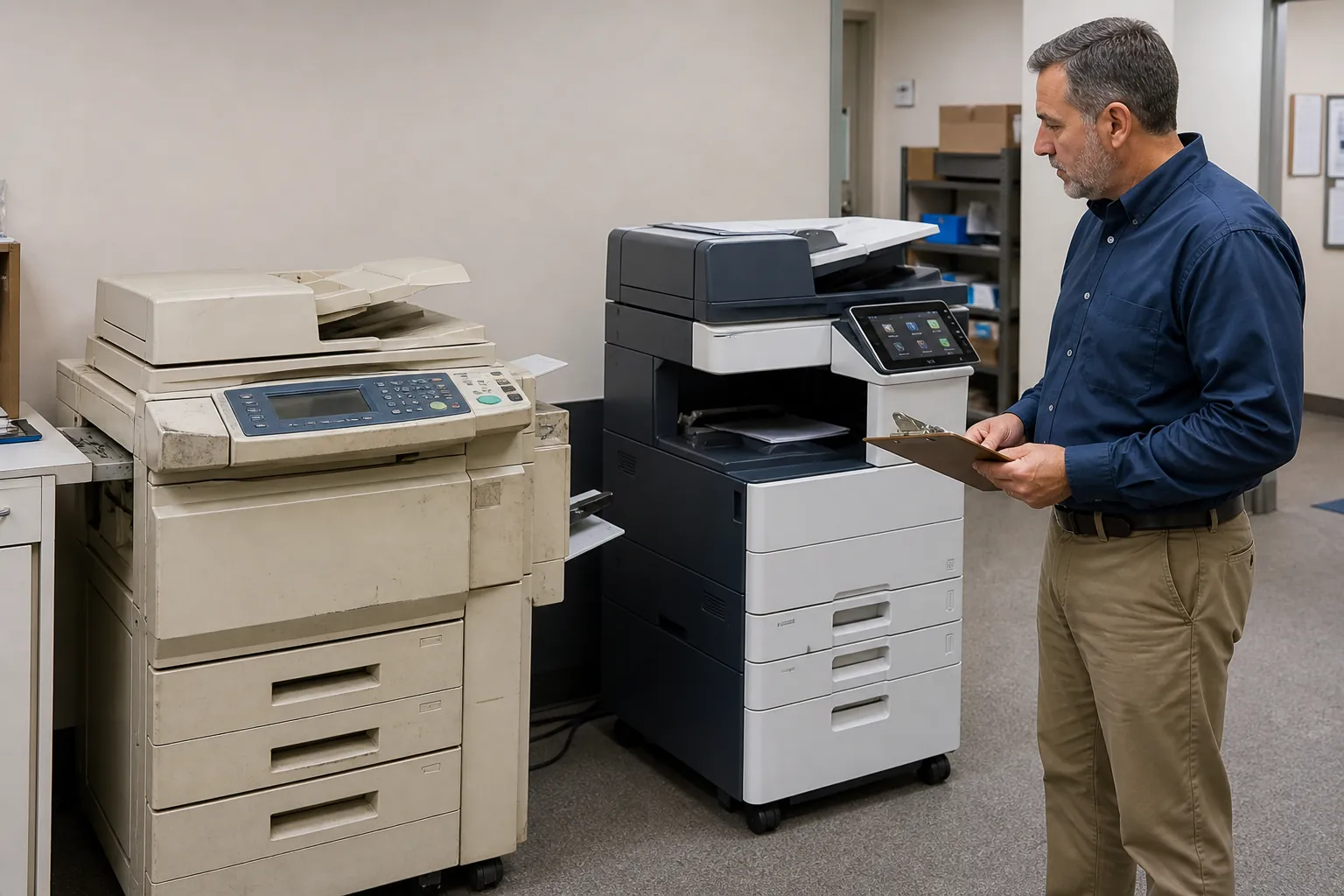
Managed print services vs copier lease: which is better?
A copier lease finances equipment; managed print services govern devices, supplies, service, reporting and sometimes workflows across a fleet. They solve different problems and may be used together. Choose from the operational scope: a single well-defined copier may need only equipment and service, while a distributed fleet may benefit from centralized management.
Use this answer to define the requirement, expose meaningful differences among proposals and verify the equipment, service or contract term that supports each claim.
Compare managed print services and copier leasing on the same fleet scope
Build a current inventory before comparing offers. Record devices, pages, color ratio, service calls, supplies, users and locations. Then separate:
- Equipment acquisition or lease payments
- Maintenance and per-page service
- Supply monitoring and fulfillment
- Fleet reporting, security and administration
- Workflow improvement and replacement planning
Use the office copier cost guide to normalize equipment, then compare governance and service separately. A complete provider quote should state which duties belong to the dealer and which remain internal.
When buying an office copier may be stronger
Ownership can fit organizations with available capital, stable requirements and a plan to operate the machine beyond a typical lease term. Buyers still need a service plan, replacement reserve and security-support timeline. Compare the full copier lease versus buy analysis before choosing.
Turn this copier question into a written requirement
Write the answer into the request for proposal, including the measurement or contract term that proves it. Ask every provider to identify the exact option, setting, service obligation or workflow assumption behind the recommendation. Keep the response with the configuration sheet for installation and future account reviews.
Price the equipment around one clear workload.
Give providers the same volume, paper, scanning, finishing and service brief.
Give IT and operations clear ownership
Decide who maintains users, firmware, certificates, scan destinations, print rules and reporting after installation. Separate provider responsibilities from internal administration. Document how users obtain help and how a security, workflow or billing issue escalates. Good equipment can still fail the business when ownership is ambiguous.
Define an acceptance test before delivery
Write the small set of results that must work on installation day: required paper, authenticated printing, scan destinations, finishing, reporting or another critical task. Use named users and real documents. Hold configuration and training open until the test passes, and retain the record with the equipment schedule.
Plan for changes during the copier life cycle
Consider higher and lower volume, staff changes, office moves, software updates and the eventual return, resale or retirement of the machine. Identify which parts of the configuration can expand and which require replacement. A decision is stronger when the exit path is understood before the first invoice arrives.
Connect this answer to the complete copier decision
Research managed print services vs copier lease: which is better alongside the office copier prices guide, copier lease versus buy comparison, Office Copier Buyer’s Guide, current copier brand guide and local copier pricing directory. Use the office copier answer library for narrower contract and feature questions, then carry one consistent requirement into the copier quote request.
- Configured equipment value
- Lease term and total payments
- Service agreement shown separately
- Upgrade and early-termination language
- Renewal, buyout and return terms
- End-of-term notice deadline
Related buyer questions worth resolving
Closely connected decisions include Should I choose a color or black-and-white office copier, How long should an office copier lease be, What questions should I ask an office copier dealer and How many pages per minute do I need in an office copier. Resolve them before comparing final proposals so price, capacity, service and contract assumptions stay aligned.
